
Bridging the Gap Between Rapid Test Strips and Portable Kits
If you’ve ever given a sample at the doctor’s office and waited days for a call or mailed a food sample to a lab and waited for a report, you know how frustrating long lab turnaround times can be. Traditional lab instruments deliver highly precise results but are expensive and require specialized facilities and trained technicians.
Some new portable testing technologies can deliver near real-time, on-site results that approach laboratory-level performance for food safety, health, and environmental applications.
Below is a quick primer on today’s lab methods.
ELISA plate readers—measure light signals in multi-well samples to quantify proteins, antibodies, and hormones.
PCR machines (thermocyclers)—amplify specific DNA sequences for genetic analysis and diagnostics.
Mass spectrometers—identify and quantify molecules based on their mass-to-charge ratio.
These drawbacks highlight a pressing need: rapid analysis that can be performed anywhere at a low cost. While it sounds difficult to achieve, a familiar class of solutions already exists: lateral flow assays.
Lateral Flow Assays: Fast, Cheap, and Qualitative
Whether you realize it or not, you’re almost certainly familiar with lateral flow assays (LFAs). It’s the technology behind at-home pregnancy tests and COVID-19 rapid antigen kits. These tests are incredibly simple: you add a few drops of a sample to a paper-like strip, and within 5–30 minutes, you get a visual result. No electricity, no training, and at a very low cost. The technology has democratized testing, allowing people to screen themselves for HIV, malaria, and allergens in their own living rooms—even in remote and low-income regions.
However, not all that glitters is gold.
LFAs are primarily qualitative—they provide binary yes/no readouts but can't tell you how much (quantitative) of a substance is present. Further, their sensitivity is often much lower than lab instruments, leading to potential false negatives. While excellent for quick triage, they fall short when more precise quantification is required.
What if you need more than a yes/no, but still want the speed of a hand-held test?
Between disposable test strips and full-fledged lab machines lies a broad spectrum of portable analytical devices. These "point-of-care" (POC) instruments aim to be as simple as a test strip but as informative as a lab report.
The most famous example is the blood glucose meter. It’s a tiny, specialized lab instrument that uses an electrochemical reaction to provide a numerical readout in seconds. The philosophy here is to strip away lab complexity until you have something user-friendly and portable that still delivers high-performance data.
The Electrochemical Advantage
Why is electrochemistry gaining increasing attention across industry? In these devices, the chemical reaction is read by an electrical current or voltage directly. This means the result is already an electronic signal that can be fed into the electronic circuit of the device. An advantage with respect to optical readers, which require cameras or complex lighting components, electrochemical sensors simplify the hardware, making it cheaper and more robust.
The Miniaturization of Electrochemical Devices
Traditionally, a potentiostat/galvanostat—the fundamental instrument used to measure electrochemical systems—was a bulky, benchtop fixture.
Driven by the urgent need for on-site testing, recent years have seen a dramatic shift toward miniaturization. At ElectroSeek, you can find examples of how this hardware has evolved into a pocket-sized reality.
A Real Example: Amulet Scientific
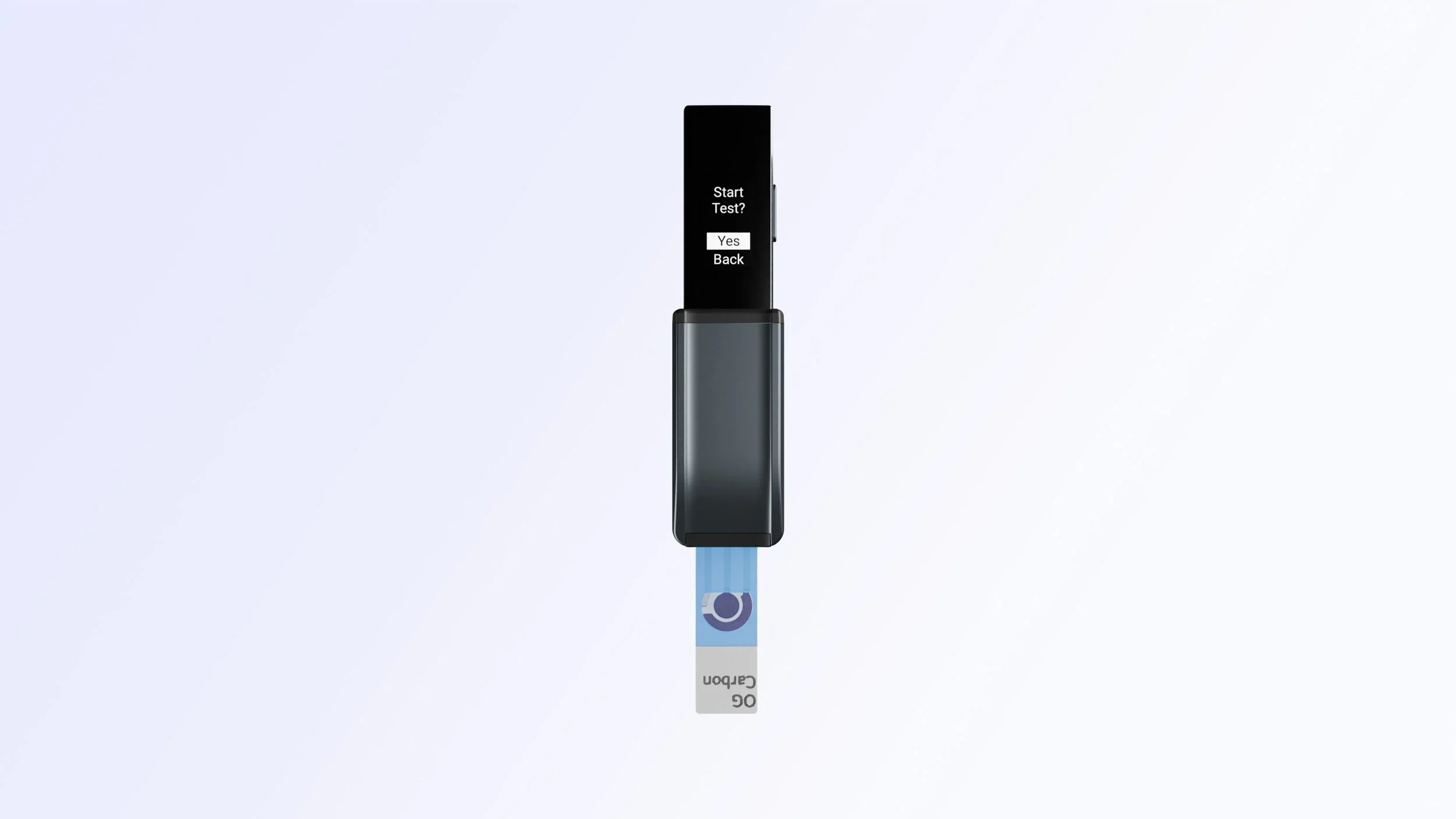
Amulet Scientific is a shining example of a company who has responded to this market demand. By developing a portable potentiostat that is even smaller and more capable than its predecessors, they are paving the way for a new era of affordability and miniaturization in analytical science performed directly onsite—wherever the testing demands.
Additionally, Amulet Scientific is developing food safety kits specifically designed to detect target food toxins and contaminants at trace levels, proving that portability does not have to come at the expense of sensitivity.
In Summary: Finding the "Middle Ground"
While there is no "universal" solution, miniaturized electrochemistry is solving the problems that the other two methods cannot: the quantitative power of a lab with the field-readiness of a test strip. At ElectroSeek, we provide the essential building blocks for this revolution—from miniaturized potentiostats and electrochemical systems to the specialized adapters required to make field testing seamless. It is no longer just a theoretical possibility—with the right kit, lab-grade field testing is already here.
— Dmitry Galyamin, PhD in Electrochemistry and Co-Founder of ElectroSeek